Fish waste turns into ammonia, which is toxic. Good bacteria turn ammonia into nitrite, which is also toxic, and then into nitrate, which is far less harmful and gets removed with water changes. In a healthy tank, ammonia and nitrite read zero, nitrate stays low and the pH stays steady.
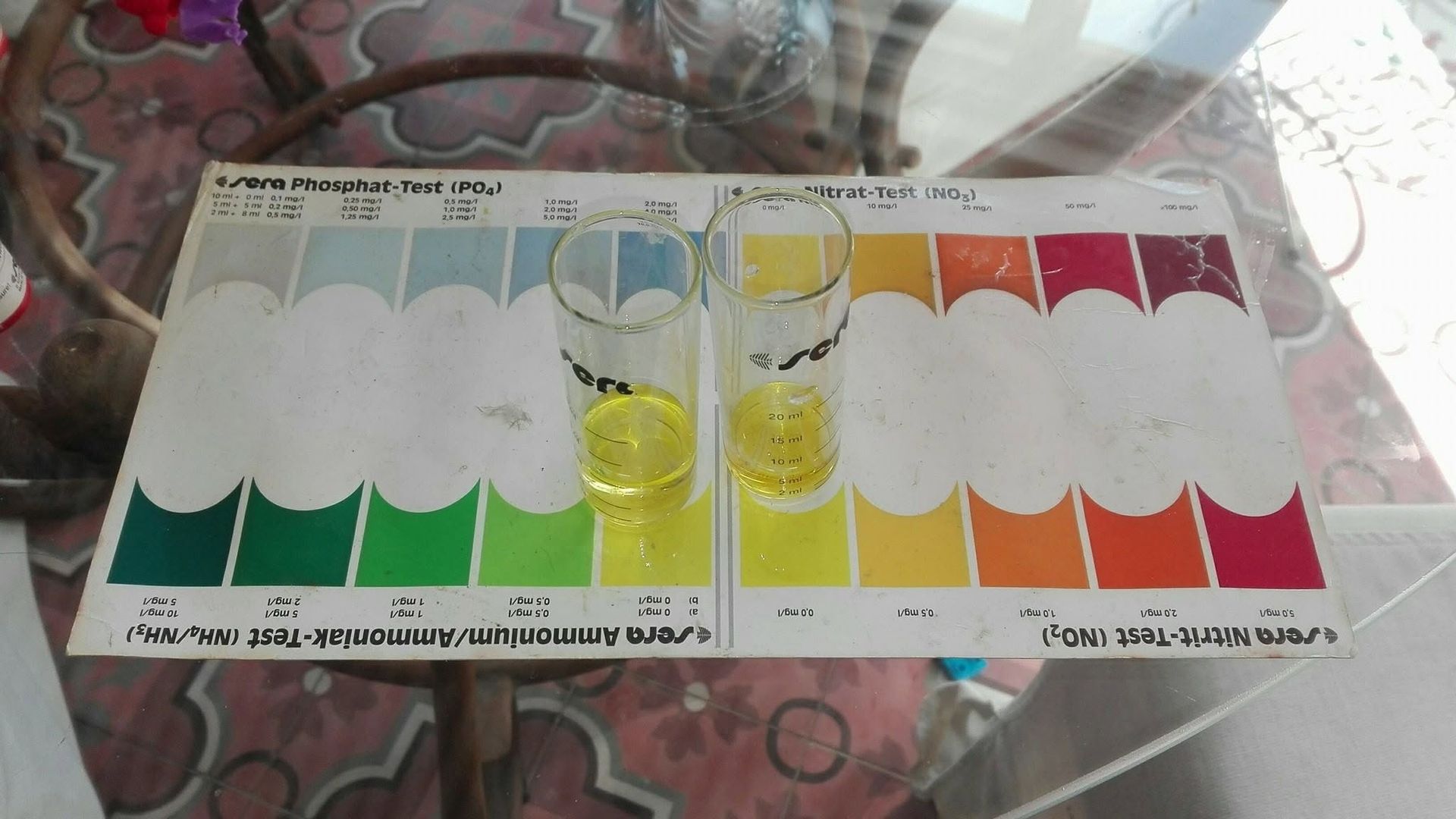
The nitrogen cycle in plain English
- Waste becomes ammonia. Fish breathe it out and leftover food and dead leaves break down into it. Even small amounts burn fish gills.
- Bacteria turn ammonia into nitrite. Still harmful: it stops fish blood carrying oxygen properly.
- Other bacteria turn nitrite into nitrate. Much safer, but it builds up over time. The only real way to remove it is a partial water change (plants use a little too).
Those bacteria live mostly in the filter media and the gravel, not floating in the water. That's why we never wash filters under the tap, and why a tank that's been "deep cleaned" can suddenly start losing fish.
Why new tanks lose fish
A brand-new tank has no bacteria yet. Add a full load of fish on day one and ammonia rises with nothing to break it down. This is often called new tank syndrome. A new tank needs about four to six weeks to build up its bacteria (to "cycle"), and fish should be added a few at a time. A bacteria starter product can help speed this up.
What to test, and what the numbers mean
| Test | Healthy reading | If it's off |
|---|---|---|
| Ammonia | 0 | Feed less, do a partial water change, check the filter is running and wasn't recently washed. |
| Nitrite | 0 | Same as ammonia. Common in new tanks and after a filter has been cleaned too hard. |
| Nitrate | Below 40 mg/L, ideally below 20 | Water changes are due. Rising nitrate between visits means too many fish or too much food. |
| pH | Steady, usually between 6.5 and 7.8 for community fish | A steady pH matters more than a perfect one. Don't chase a number with chemicals. |
| Temperature | About 24 to 27 °C for most tropical fish | Check the heater and the thermometer. See our guide to tank risks. |
| KH (carbonate hardness) | Not too low | Low KH lets pH drop over time. Regular water changes put it back. |
A note on Cape Town tap water
In much of Cape Town the tap water is fairly soft, which suits most tropical community fish. Soft water has less buffering, though, so in a tank that goes a long time without water changes the pH can slowly drift down. It's one more reason small, regular water changes beat big, occasional ones. Tap water must always be treated with a water conditioner before it goes into the tank (see aquarium chemicals: what you need).
Test strips or liquid kits?
- Test strips are quick and fine for a regular check at home.
- Liquid test kits are more accurate and better when something is going wrong.
Whichever you use, check the expiry date. Old test kits give wrong readings.
How often to test
- New tank: every few days for the first six weeks.
- Established tank: once a month is enough if all is well.
- Any time fish look unwell, after adding new fish, after a move or after a power cut.
On every maintenance visit we test the water, so problems are caught before the fish show them. It's part of every monthly maintenance package.
Let us keep an eye on your water
Water testing, water changes and filter care on every visit, with food and treatments included.